Pit report · October 13, 2026
Autonomous vs manned haul trucks: what overhead imagery shows
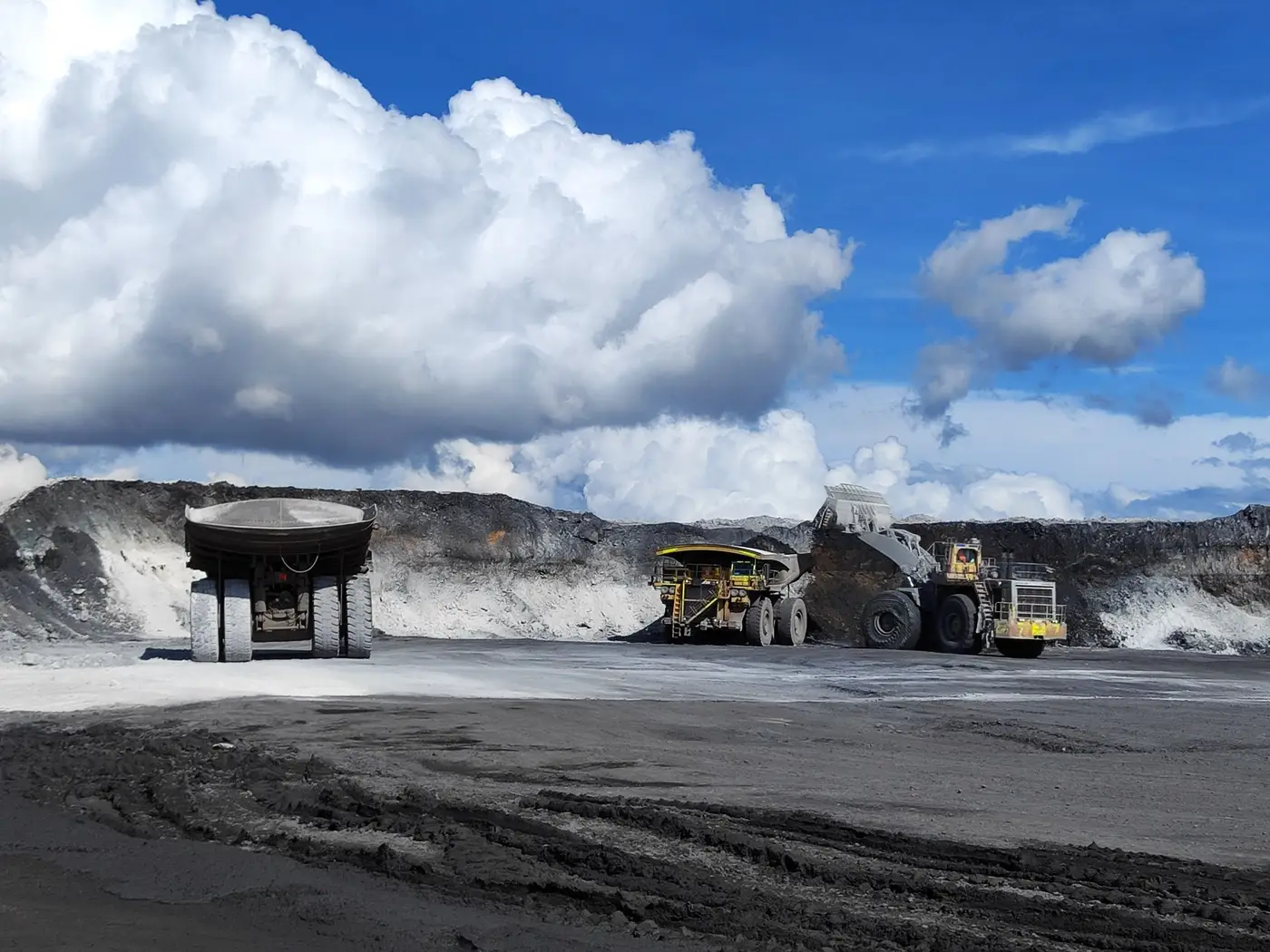
An analyst asked me last month whether a particular pit had gone fully autonomous or still had drivers in the cab. The client needed it for a maintenance-contract bid, and the only imagery on hand was a monthly satellite pass. That's a harder question to answer from overhead than most people assume, and it's worth walking through why.
Why the AHS question keeps coming up
Whether a pit runs Komatsu FrontRunner, Cat MineStar Command, or a manned fleet changes a lot downstream: parts and service contracts, labor headcount estimates, safety-case comparisons, even which OEM gets credit for the tonnage. If you're sizing a competitor's installed base, "how many trucks" and "what kind of operation" are two different questions, and a client asking for a fleet roster is usually also asking, without saying it, whether that fleet is autonomous.
The trouble is that autonomy doesn't photograph the way people expect. A Komatsu 930E running FrontRunner and a manned 930E look close to identical from directly overhead. Same dump body, same tailgate profile, same chassis footprint at 30 to 50 cm resolution. The ROPS structure stays on most autonomous trucks for maintenance access, so even the absence of a visible cab isn't a reliable tell at that scale.
What shows up in the imagery
Operational layout gives you more than the truck itself does. A few things to check on a pass:
- Light-vehicle exclusion. AHS pits fence off or geofence the active haul routes from pickups and service vehicles. You can sometimes see this as a cleared buffer or a distinct perimeter road that light vehicles use instead of crossing the active bench.
- Muster and shift-change areas. Manned pits need somewhere for drivers to park personal vehicles and gather at shift change, usually near the pit crest or the main access ramp. AHS pits don't need this at the same scale, and the apron that would normally hold it is often smaller or repurposed.
- Haul road geometry. Autonomous systems favor consistent turning radii and standardized ramp widths because the path planning doesn't improvise the way a driver does. A pit with unusually uniform, repeated curve geometry across multiple ramps is worth a second look.
- Spacing in queues. At the crusher or dump point, AHS trucks tend to hold tighter following distances, since collision-avoidance systems are doing the spacing instead of a driver's judgment. This is easier to catch in a stack of monthly passes than in any single image.
None of these is conclusive on its own. Together, across a few months of passes, they build a reasonable case.
FrontRunner vs MineStar: fleet signatures that hold up
Manufacturer is a far more reliable signal than autonomy status. FrontRunner runs almost exclusively on Komatsu's own ultra-class trucks, the 830E and 930E being the common ones in active AHS deployments. MineStar Command for hauling runs on Cat's 793 and 797 platforms. The body shape, tailgate angle, and chassis proportions differ enough between a 930E and a 797F that you can tell them apart in good overhead imagery even without seeing a cab.
That's the more useful place to put your effort. Instead of trying to call autonomous-versus-manned from a single frame, count which OEM's trucks are on site and watch how that mix shifts pit to pit and month to month. A pit that swaps its haul fleet from Cat to Komatsu bodies over two or three passes tells you something concrete about a contract win or a fleet replacement program, independent of whatever's happening with the operator seat.
That's the approach behind Mine Fleet OEM Share: a pit-by-pit roster of truck, excavator, and dozer counts by manufacturer type, rebuilt from a fresh pass every month so you can see the mix move before it shows up in anyone's annual report. We don't call autonomy status from the imagery, because that's not a call the imagery reliably supports. What we track is whose iron is actually on the bench, pit by pit, and how that changes.
If sizing a competitor's fleet by OEM is the question you're trying to answer, that's worth a conversation.