Pit report · November 2, 2026
How to tell a water truck from a haul truck in satellite imagery
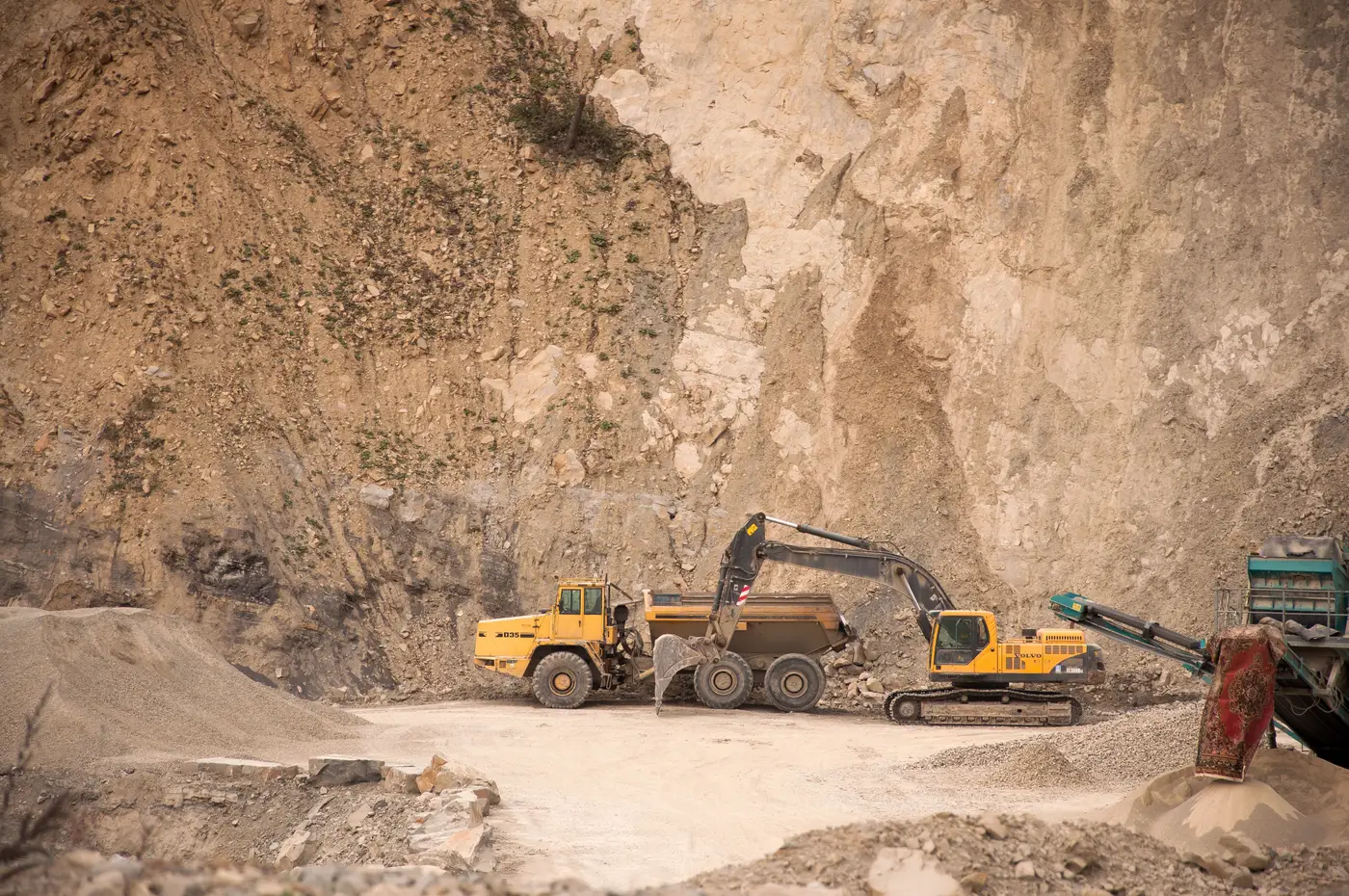
If you're counting fleet from imagery instead of a site visit, the first mistake that wrecks a pit count isn't missing a truck. It's counting the wrong kind of truck as production iron. A water cart parked at the end of a bench reads, at a glance, almost like a small haul truck. Get that wrong across a dozen pits and your OEM share numbers are off before you've even started comparing manufacturers.
Here's what actually separates them at 0.5 m resolution.
Body shape is the first tell, not size
A haul truck body is a rigid, open-top dump box. From directly overhead it shows up as a rectangle with slightly flared sides and a visible cab offset to one side (usually left, sometimes center on some OEM models). The body often has a step or lip at the tailgate end, and if the truck is loaded, you can sometimes make out the material pile breaking the rectangle's clean edge.
A water truck or dust suppression unit carries a cylindrical tank, not a box. Overhead, a tank reads as a rounded, elongated shape rather than a hard-edged rectangle, and the shadow it casts at low sun angles curves instead of falling in a straight line off a flat deck. On a lot of water trucks the tank sits slightly higher relative to the chassis than a haul body does, so the shadow width-to-length ratio is different even when the overall truck length looks similar.
Size helps but don't lead with it. A 777-class water truck isn't dramatically smaller than a mid-size haul truck, so if you're triaging by footprint alone you'll misclassify plenty. Shape first, size second.
Where the truck is sitting matters almost as much as what it looks like
Haul trucks cluster where the production cycle puts them: queued at a shovel face, backed into a crusher tip, or strung out along the primary haul road in a loaded/empty pattern you can trace from one monthly pass to the next. Water trucks and graders don't queue. They sit alone or in pairs on active haul road segments, often near a grade change or a dusty switchback, and they show up in roughly the same spot pass after pass because that's where the road needs the water, not because material is moving through there.
If you see a tank-shaped unit parked mid-road with no queue around it and no shovel or dump point nearby, that's support fleet, not production. If you see several rectangular bodies lined up nose-to-tail approaching a face, that's your haul fleet.
Dust suppression trucks vs haul trucks: the edge cases
The confusing case is a dust suppression truck caught mid-spray on a haul road during a pass. The wet strip behind the tank can darken the road surface in a streak that, from a distance, looks like it could be shadow from a line of equipment. Check the strip's edges: a wet patch has a soft, feathered boundary that follows the road's camber, where a truck shadow has a hard edge that matches the sun angle for that scene. One streak with no corresponding vehicle shape at its head isn't a truck you missed. It's water on the road from a pass a few minutes earlier.
Keeping the support fleet out of your OEM count
None of this matters if you're only doing it once. The value is in holding the same classification rules pit to pit, pass to pass, so a water truck in March doesn't become a miscounted haul truck in April just because a different analyst eyeballed that frame. That consistency is the actual hard part of sizing a competitor's fleet by hand, and it's the reason we built Mine Fleet OEM Share as a monthly, pit-by-pit roster that separates manufacturer-type counts for production units from everything else sitting on the haul road.
If you're already staring at a pit on this month's pass trying to decide if that's a 793 or a water cart, you don't need to resolve that call on your own every time.